
Shrimp glazing is one of the most discussed yet often misunderstood topics in the frozen seafood industry.
If you have ever reviewed a shrimp specification sheet, you have probably seen terms like glaze percentage, net weight, or gross weight. For many people, these terms can be confusing at first.
This guide explains shrimp glazing in a clear and practical way. You will learn what glazing is, why it exists, how glaze percentage works, and how to interpret net weight versus gross weight.
The goal is simple: to make shrimp specifications easier to understand.
What Is Shrimp Glazing?
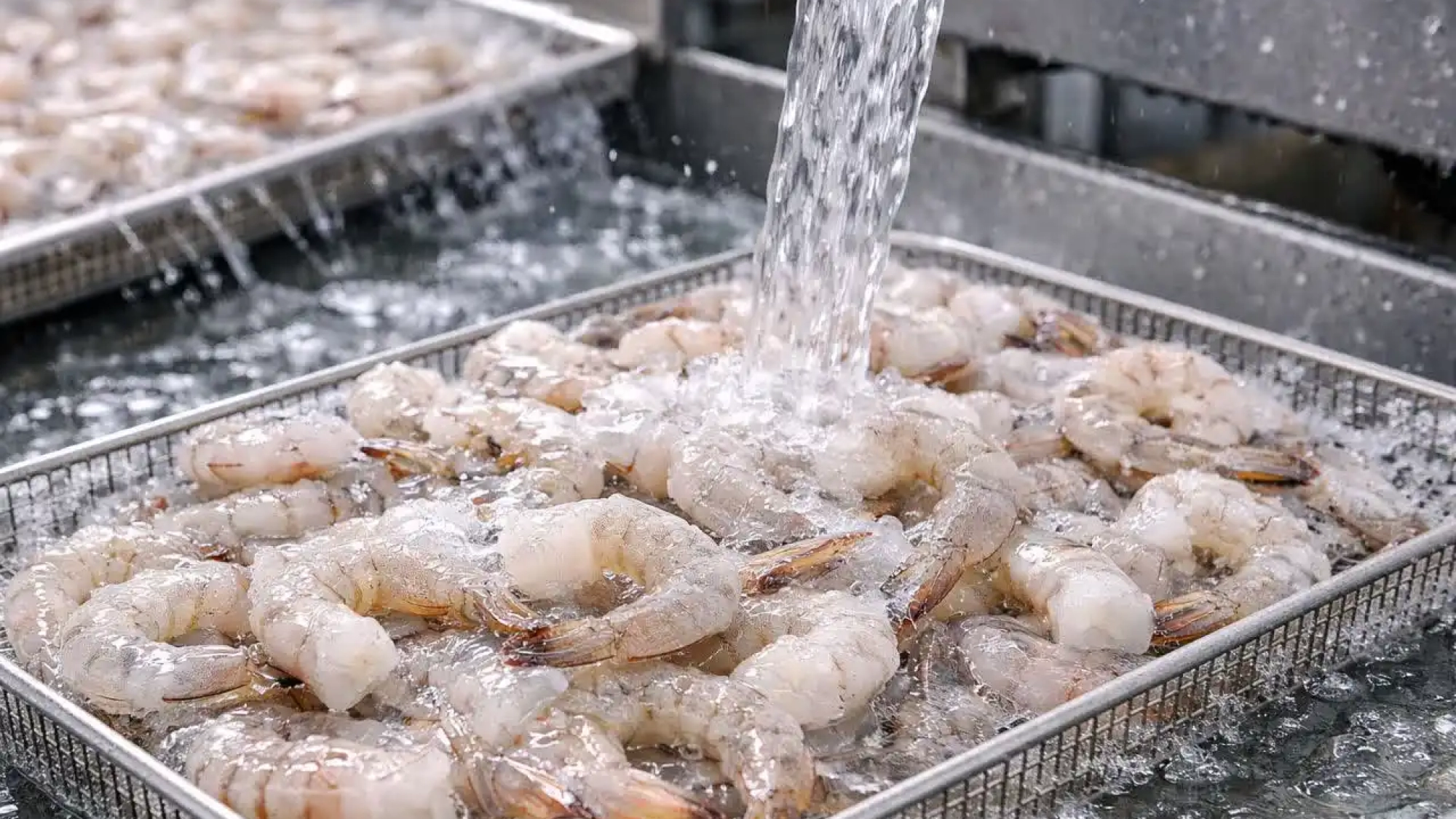
Shrimp glazing is the process of applying a thin protective layer of ice to frozen shrimp.
This is done by briefly dipping or spraying frozen shrimp with clean water, which then freezes on the surface.
The purpose of glazing is protection, not weight manipulation. A proper glaze helps:
- reduce dehydration
- prevent freezer burn
- protect surface quality
- maintain texture during storage
Without glazing, frozen shrimp can lose moisture over time and develop dry surfaces. This is one reason glazing is widely used for [Frozen vannamei shrimp] in international cold chains.
Why Glazing Is Used in Frozen Shrimp
Glazing is a practical solution for cold-chain storage.
Frozen seafood is often stored and transported for long periods. During this time, exposure to air can slowly dry the surface of the product. The glaze acts as a barrier.
A well-controlled glaze can:
protect product quality
stabilize surface moisture
support longer storage stability
reduce visual dryness after thawing
Because of these benefits, glazing is widely used by processors and any professional Vannamei shrimp exporter.
What Is Glaze Percentage?
Glaze percentage refers to how much of the total weight is ice glaze.
For example:
If a 1 kg bag has 10% glaze, about 100 grams are ice and 900 grams are shrimp.
This is why glaze percentage matters in specifications. It helps people understand how much actual shrimp is inside.
When people compare offers during Sourcing vannamei shrimp, glaze percentage becomes an important reference point.
Glaze percentage is not automatically good or bad. It is simply a specification detail that should be transparent.
Net Weight vs Gross Weight
Frozen Shrimp Glaze Calculator
Enter carton weight and glaze percentage to estimate real shrimp content.
Net Shrimp Weight: – kg
Ice (Glaze) Weight: – kg
This is where confusion often happens.
Gross weight
= shrimp + glaze
Net weight
= shrimp only
If two cartons both say 10 kg gross weight but one has 10% glaze and the other 20%, the real shrimp content is different.
Understanding this difference helps people interpret product descriptions more accurately when reviewing offers from a Vannamei supplier.
Is More Glaze Always Bad?
Not necessarily.
A very low glaze may offer less protection in long storage. A very high glaze may create confusion if not clearly declared.
What matters most is:
- clarity
- transparency
- consistency
- agreement on specifications
When glaze percentage is clearly stated, misunderstandings are reduced.
Does Glazing Affect Shrimp Size?
No.
Shrimp size counts (like 20/30 or 40/50) are based on shrimp count per weight and refer to the shrimp itself.
Glazing does not change the size category. It only affects total weight.
For anyone learning about shrimp sizes, a clear reference like a Vannamei size chart helps separate sizing concepts from glazing concepts.
Glazing and Long-Distance Cold Chain
In international seafood trade, products may travel long distances and stay in cold storage for extended periods.
During long cold-chain cycles, protective glazing helps maintain product condition.
This is one reason glazing remains a standard practice among any experienced Vannamei shrimp exporter from Iran or other exporting regions.
Common Misunderstandings About Shrimp Glazing
Many misunderstandings come from unclear communication.
Some people assume glazing means adding extra water for weight. In reality, glazing is a recognized preservation method.
Problems arise only when glaze percentage is not clearly stated or when expectations differ.
Clear specifications prevent confusion.
How to Read Glazing in a Spec Sheet
A shrimp specification sheet usually lists:
product format (for example HOSO vannamei shrimp)
size count
glaze percentage
storage temperature
packing details
Understanding glaze percentage as one line among many helps keep it in context.
Industry Transparency and Company Responsibility
In modern seafood trade, transparency matters more than ever.
Clear communication about glaze percentage, net weight, and specifications builds trust.
Responsible companies — including specialized exporters like F2f foods company — typically provide detailed spec sheets so that glazing is fully understood as a preservation method, not a hidden factor.
Glaze Percentage Quick Reference
| Glaze % | What It Means | Typical Use Case |
|---|---|---|
| 0–5% | Very light glaze, close to “dry” frozen | Premium specs, strict net weight expectations |
| 6–10% | Light protective glaze | Common for export-grade frozen shrimp |
| 11–20% | Moderate glaze, noticeable impact on net content | Must be clearly declared in specs |
| 20%+ | Heavy glaze, high difference between gross and net | Requires buyer approval to avoid disputes |
Net Weight vs Gross Weight Examples
| Carton Label | Glaze % | Net Shrimp Content | Practical Meaning |
|---|---|---|---|
| 10 kg gross | 10% | ≈ 9.0 kg shrimp | About 1.0 kg is glaze (ice) |
| 10 kg gross | 15% | ≈ 8.5 kg shrimp | About 1.5 kg is glaze |
| 10 kg gross | 20% | ≈ 8.0 kg shrimp | About 2.0 kg is glaze |
FAQ: Shrimp Glazing
Quick answers to the most common questions about glaze percentage, net weight, and export-ready frozen shrimp specifications.
What is shrimp glazing?
Is glazing the same as adding water for extra weight?
How is glaze percentage calculated?
What is the difference between net weight and gross weight?
Does glaze percentage affect shrimp size counts (e.g., 20/30, 40/50)?
What glaze percentage is common for export-grade frozen shrimp?
Can glaze help protect shrimp quality during long shipments?
What should a clear export specification include (related to glazing)?
Conclusion
Shrimp glazing is a protection method, not a quality shortcut.
When glaze percentage and net weight are clearly stated, glazing becomes simply another technical detail in frozen seafood specifications.
Understanding how it works makes shrimp descriptions easier to interpret and reduces confusion when reading product information.
Add a Comment